
Going backwards really fast: NuSTAR detects an Ultra-Fast Inflow
December 15th, 2025
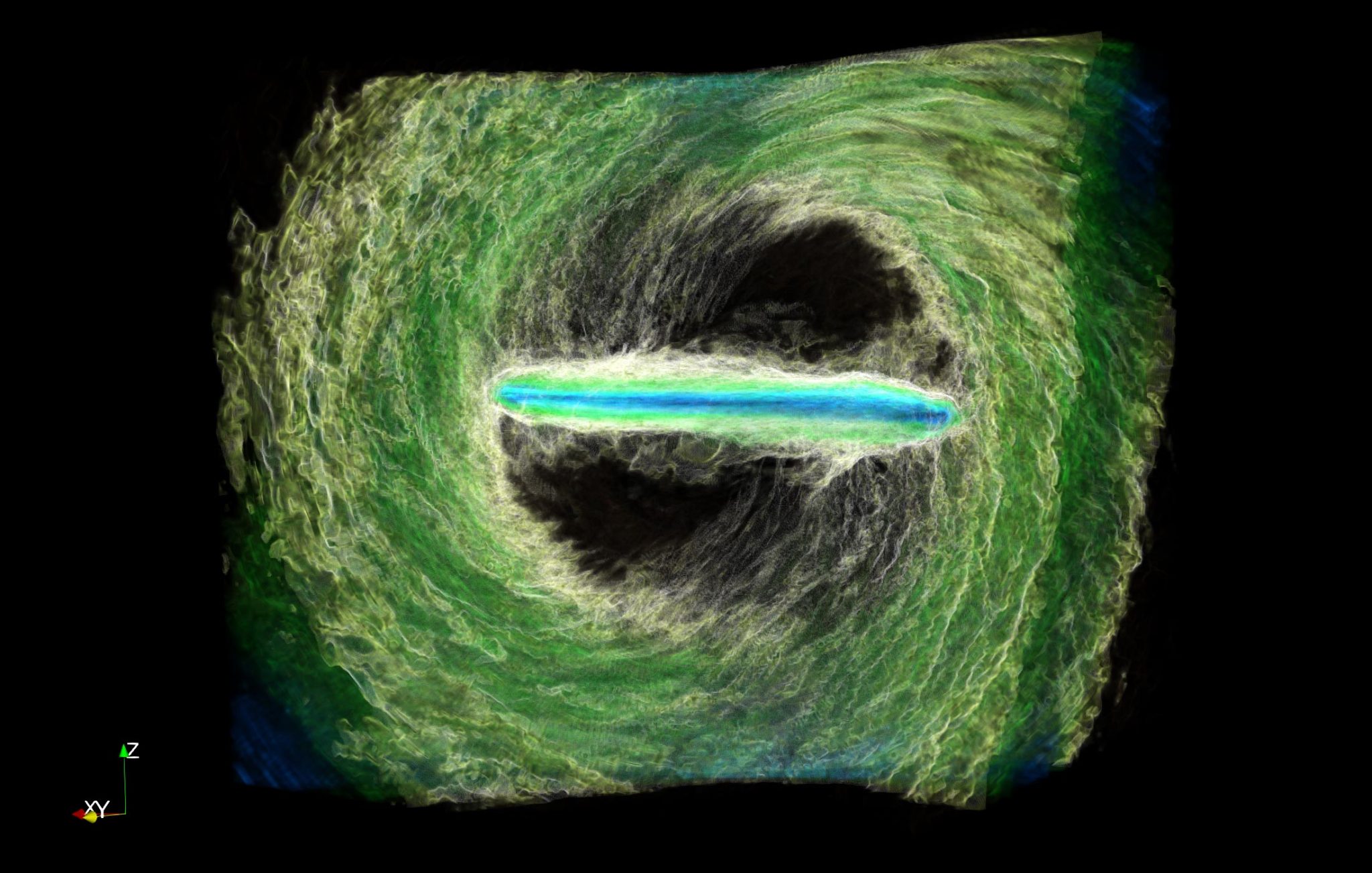
We are used to the idea of supermassive black holes driving outflows: the vast amount of energy generated close to the black hole blowing enormous quantities of gas back out into the host galaxy in an outflowing wind, sometimes at significant fractions of the speed of light. In this way, an accreting black hole can have profound effects on the evolution of its host galaxy.
However, recent results from a NuSTAR study of the galaxy ESP 39607 show evidence of the opposite phenomenon—an ultrafast inflow of gas falling towards the black hole at nearly 20% light speed. Detections of this kind of event are incredibly rare, so it is particularly valuable to have a NuSTAR detection in two separate observations of an absorption line in the spectrum which indicates the presence of this inflow.
There are several different mechanisms that could cause an ultrafast inflow. One is accretion disk tearing, in which a warped disk, misaligned with the black hole's rotation, breaks apart in places, causing gas to skip the disk and fall directly towards the black hole. Another is a failed outflow, in which gas blown out by the black hole only gets so far before rapidly falling back again. It is likely that the picture of black hole accretion is complex, involving both inflows and outflows in different parts of the system at different times. These NuSTAR data, and the data from follow-up observations of this source by other missions, will be invaluable for refining our understanding of the dynamics of the extreme, chaotic environment around supermassive black holes.
Author: Hannah Earnshaw (NuSTAR Project Scientist, Caltech)